Illustrative artwork of an aircraft ascending through dramatic clouds at dawn

Where Aviation Meets Curiosity

Stories, knowledge, and community for everyone who looks up when they hear an engine.

Explore Subsonic Pilot

Dispatches from the world of aviation, from student pilots to seasoned captains.

Subsonic Pilot

AI-powered flight training tools built for student pilots and aviation enthusiasts.

Cockpit view illustration looking out at horizon during golden hour

Your AI Flight Instructor

Study smarter, fly better. SubsonicPilot.com brings modern AI tools to flight training.

Flight Chat

Ask aviation questions and get detailed, regulation-backed answers instantly.

Flight Planner

Plan cross-country routes with weather briefings and fuel calculations.

Post-Flight Debrief

Review your flights with AI analysis to accelerate your learning curve.

AeroFlash

Flashcard system for FAA written exam prep. Study on any device, anywhere.

Visit SubsonicPilot.com
Illustration of a general aviation plane being inspected in a hangar

Built by Av Geeks, for Av Geeks

MachZero Aviation, LLC was founded on a simple idea: aviation should be accessible, fun, and endlessly fascinating. Whether you're a student pilot prepping for your checkride or someone who just loves watching planes, this is your corner of the sky.

We build tools, write stories, and create resources that make aviation knowledge approachable. From AI-powered training apps to deep dives into aeronautical history, MachZero is where curiosity meets the cockpit.

Learn by Doing

Hands-on tools and scenarios, not just textbook theory.

Open Knowledge

Aviation info shouldn't be gated. We share freely.

Safety First

Every resource is built with safety and accuracy in mind.

Community

A welcoming space for pilots and enthusiasts alike.

Get in Touch

Have a question, story idea, or just want to talk aviation? We'd love to hear from you.

Based in Colorado, USA
Somewhere between FL180 and the pattern

All Posts

Flight training, Colorado GA news, and aviation stories.

Pilot with clipboard at T-hangar
Student Pilot Apr 8, 2026

Should I Buy a Plane for Training and Time Building?

The real costs of owning a 172, 182, or Archer — hangars, maintenance, engine reserves, insurance, LLCs, partnerships, and leaseback explained honestly.

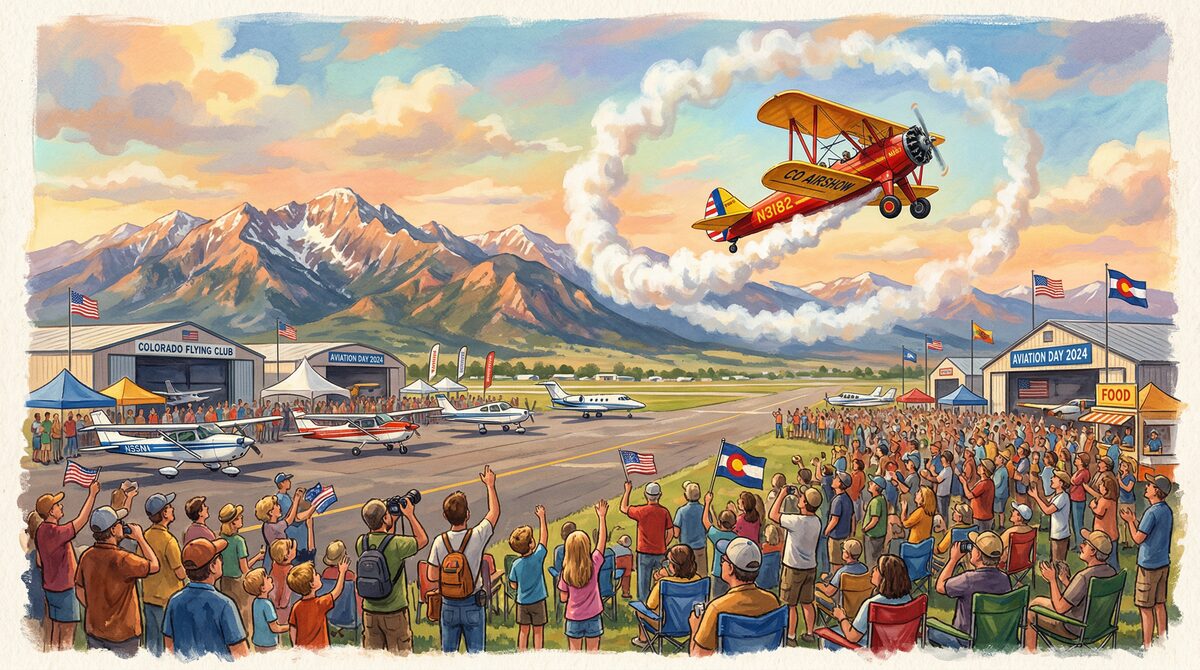
Aircraft performing at a Colorado airshow with mountain backdrop
Colorado GA Apr 8, 2026 7 min read

Colorado Aviation Events Calendar 2026: Your Season Guide

Fly-ins, airshows, and conferences from April through October — every Colorado GA event worth putting on your calendar this year.

Student pilot with instructor in Cessna cockpit
Student Pilot Apr 8, 2026 7 min read

Your First 10 Hours: What Nobody Warns You About

The radio will terrify you, your body will feel wrong, and around hour 7 you'll think you're broken. Here's what's actually happening.

Women pilots gathered at an aviation event with aircraft in the background
Community Apr 8, 2026 6 min read

Women Who Fly Colorado: The 99s and WAI Building Community at Altitude

The Colorado Ninety-Nines and Women in Aviation International are doing the work that grows the pilot community. Here's what they're up to.

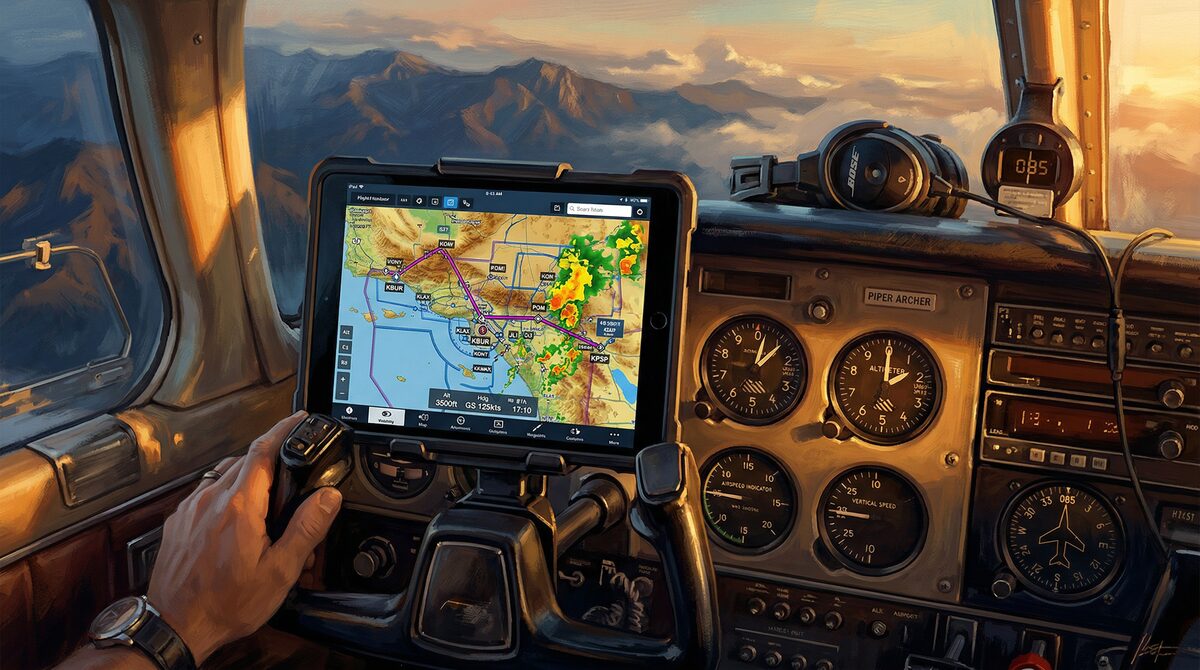
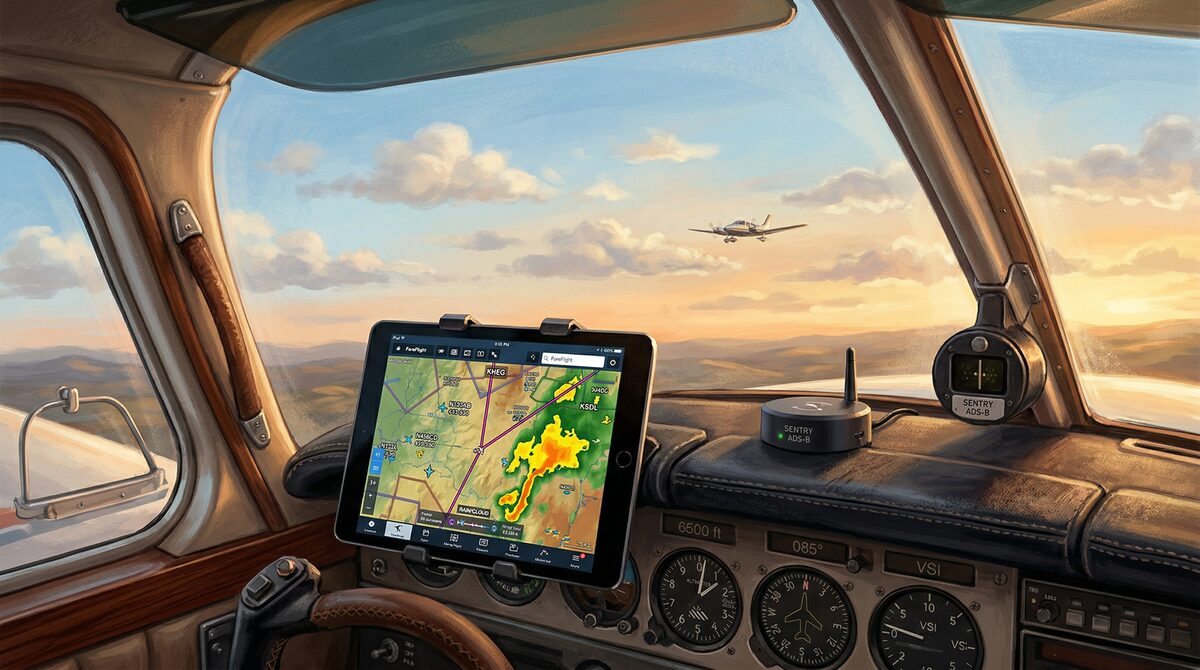
iPad mounted on cockpit yoke bracket showing ForeFlight flight planning map with weather overlays
Flight Training Apr 1, 2026 8 min read

ForeFlight for Beginners: Your Complete Guide to the App Every Pilot Uses

How ForeFlight works, what it does, and how to actually use it — from your first flight plan to connecting an ADS-B receiver.

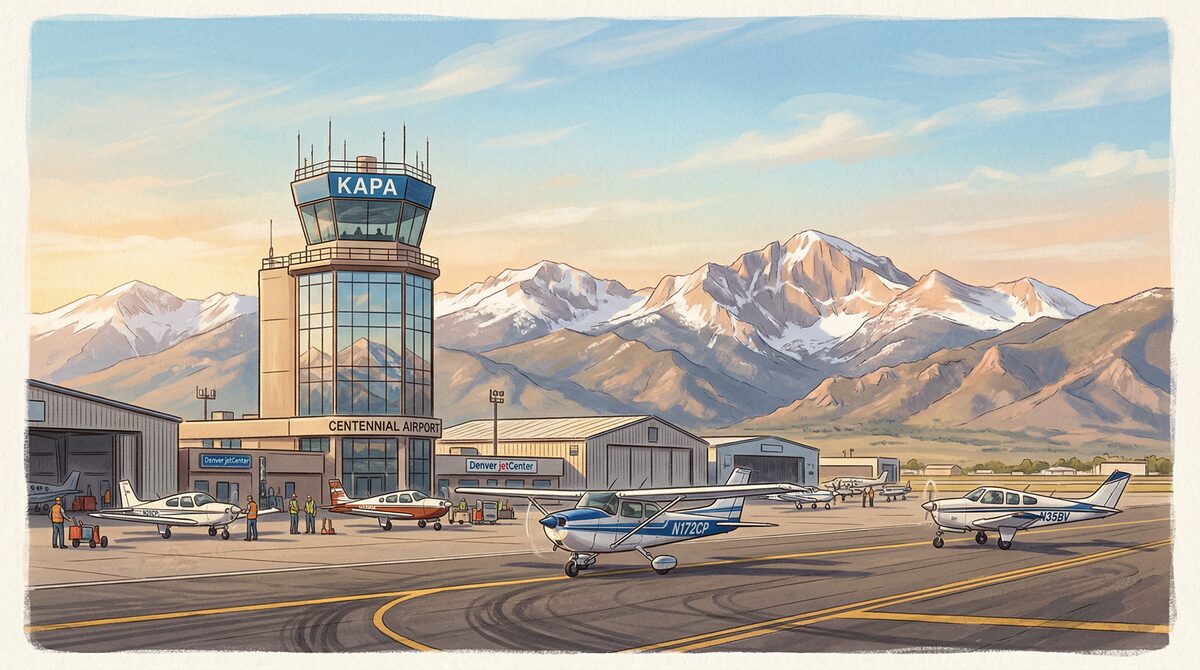
Centennial Airport control tower at KAPA
Colorado GA Mar 29, 2026 7 min read

KAPA Dispatch: What's Happening at Centennial Airport This Spring

Tower rehab, unleaded avgas milestones, the Runway 5K, and the full 2026 Colorado fly-in and airshow calendar.

Cockpit view illustration during golden hour flight
Flight Training Mar 28, 2026 6 min read

The Art of the Preflight Checklist

What experienced pilots know about the most critical 15 minutes of every flight, and why complacency is the real danger.

Cloud formations viewed from a pilot's perspective
Weather Mar 25, 2026 5 min read

Reading Clouds Like a Pilot

A visual guide to cloud types and what they mean for flight planning.

VOR navigation instrument in a cockpit
Navigation Mar 22, 2026 5 min read

VOR vs. GPS: When Old School Wins

Why instrument-rated pilots still train on VOR navigation and when it matters.

Vintage biplanes in formation through clouds
History Mar 18, 2026 7 min read

Barnstormers to Boeings: A Short History of GA

How general aviation evolved from post-war barnstorming to the modern cockpit.

ADS-B receiver mounted on aircraft glareshield
Tech Mar 15, 2026 5 min read

ADS-B In: What Every Pilot Should Know

Understanding traffic awareness technology and how to get the most from your receiver.

Student pilot in cockpit during first solo flight
Student Pilot Mar 10, 2026 5 min read

First Solo: What Nobody Tells You

Honest notes from a student pilot about the reality of flying alone for the first time.

Back to Home

The Art of the Preflight Checklist

Cockpit view illustration during golden hour flight

Every flight begins long before the engine starts. The preflight checklist is the most critical 15 minutes of any flight, and yet it's the phase where complacency creeps in most easily. Experienced pilots know this. They treat the preflight with the same respect on flight number 5,000 as they did on flight number 5.

Why Checklists Exist

Aviation checklists didn't appear by accident. They were born from tragedy. In 1935, a Boeing Model 299 crashed during a demonstration flight because the crew forgot to release the elevator lock. The aircraft was too complex to rely on memory alone. The solution wasn't simpler planes. It was a simple piece of paper.

That philosophy hasn't changed. Modern aircraft have gotten exponentially more complex, but the checklist remains the single most effective safety tool in a pilot's arsenal. It's a forcing function against the natural human tendency to skip steps we've done a hundred times before.

The Walk-Around

Start outside the aircraft. You're looking for anything that shouldn't be there, and confirming everything that should. Check the control surfaces for freedom of movement. Inspect the fuel for water contamination. Look at the tires, the oil level, the propeller for nicks. Each item exists on the checklist because at some point, someone found it broken and it mattered.

One common mistake student pilots make is treating the walk-around like a visual scan. It's not. You should be touching things. Move the ailerons. Push on the pitot tube cover to make sure it's removed. Physically check the fuel drain. Your hands find things your eyes miss.

Inside the Cockpit

Once inside, the checklist shifts to systems verification. Avionics, instruments, fuel selector position, trim settings, circuit breakers. The key here is flow. Experienced pilots develop a physical flow pattern through the cockpit that mirrors the checklist. Left to right, top to bottom, or whatever pattern matches your aircraft.

But here's the critical distinction: the flow is a memory aid, not a replacement for the checklist. After completing your flow, you pick up the written checklist and verify. Flow and verify. That's the professional standard.

The Complacency Trap

The most dangerous point in a pilot's career isn't the first 50 hours. It's around 200 to 500 hours, when you know enough to feel confident but haven't yet experienced enough emergencies to respect what you don't know. This is when preflight corners get cut. "I just flew this plane two hours ago, it's fine." Famous last words in more than one NTSB report.

The antidote is discipline. Treat every preflight like it's a check ride. The examiner is always watching, and the examiner is physics.

What the FAA Actually Requires

FAR 91.103 requires pilots to become familiar with all available information concerning the flight before departure. FAR 91.7 makes the pilot in command responsible for determining the aircraft is in airworthy condition. The preflight isn't just good practice — it's a legal obligation. The NTSB accident database is full of accidents where investigators found the cause was a condition that a thorough preflight would have caught: fuel contamination, control lock left in, missing inspection covers, improperly secured cargo.

The FAA Pilot's Handbook of Aeronautical Knowledge dedicates an entire chapter to preflight planning and inspection. It's worth reading the section on visual inspection — not because you don't know how to do a walk-around, but because the PHAK describes the reasoning behind each inspection item, which makes the habit stickier.

The Most Commonly Skipped Items

Based on NTSB accident data and CFI reports, these items get skipped or rushed most often:

Fuel quantity verification. Visually confirming fuel quantity — not just reading the gauge. Fuel gauges in GA aircraft are notoriously inaccurate. Stick the tanks or visually verify with a known reference mark. Fuel exhaustion is one of the leading causes of GA accidents and almost all of them were preventable.

Control surface freedom and range. Students often check that the ailerons move but don't verify full range. A baggage item or a foreign object can limit travel without being immediately obvious.

Sumping all fuel drains. Each drain needs to be checked — not just the main drain. Water is heavier than avgas and sinks to low points. A single unsumped drain can leave water in the system even if the others checked clean.

Pitot heat check. Takes five seconds and is especially critical for IMC flight. Cold, wet conditions can ice a pitot tube in minutes. A non-functioning pitot heater discovered at 4,000 feet in IMC is a much worse problem than one found on the ramp.

Developing the Right Habit Loop

The goal of the preflight is not to check boxes — it's to develop pattern recognition for abnormality. After 50 preflights, you develop a baseline sense of what the aircraft should look and feel like. When something is off — a small oil streak that wasn't there last flight, a slight resistance in the elevator, a fuel cap that doesn't click the same way — your trained eye catches it before it becomes a problem. That's what experienced pilots mean when they say "the airplane told me something was wrong."

The only way to develop that intuition is consistency. Same airplane, same route, same checklist, every time.

Back to Home

Reading Clouds Like a Pilot

Cloud formations viewed from a pilot's perspective

Clouds are the atmosphere's storytelling medium. For pilots, they're not just scenery. They're weather briefings written across the sky. Learn to read them, and you'll understand turbulence, icing, and visibility long before your instruments confirm what the sky already told you.

The Basics: High, Middle, Low

Cloud classification starts with altitude. Cirrus clouds (the wispy, high-altitude ones) form above 20,000 feet and are made of ice crystals. They often signal an approaching warm front 12 to 24 hours out. Altostratus and altocumulus live in the middle layers, typically between 6,500 and 20,000 feet. Stratus and cumulus occupy the lower atmosphere.

For VFR pilots, the low clouds matter most. A solid stratus layer at 2,000 feet AGL means your planned cross-country just became an IFR flight, and if you're not rated, it became a no-go.

Cumulus: The Good and the Ugly

Fair-weather cumulus are a pilot's friend. They indicate thermal activity but generally benign conditions. Small, scattered puffballs with flat bottoms and rounded tops mean the atmosphere is doing its thing in a manageable way. You might get some light bumps flying through or near them, but nothing dramatic.

When those flat-bottomed cumulus start growing vertically, pay attention. Towering cumulus (TCU) are the precursor to cumulonimbus, the thunderstorm cloud. If you see vertical development reaching toward the upper atmosphere, you're watching a thunderstorm being born. Give it wide berth. The FAA recommends at least 20 nautical miles from any thunderstorm cell.

Lenticular Clouds: Mountain Wave Warning

If you fly anywhere near mountains, learn to recognize lenticular clouds. They look like smooth, lens-shaped formations that hover near ridgelines. They're beautiful. They're also a signpost for mountain wave turbulence that can exceed structural limits of light aircraft. Lenticulars mean strong winds aloft and rotors below. Respect them.

Fog: The Sneaky One

Fog is just a cloud at ground level, but it's responsible for more VFR-into-IMC accidents than any other weather phenomenon. Radiation fog forms on clear, calm nights and burns off after sunrise. Advection fog rolls in when warm, moist air moves over cooler ground. The key difference: radiation fog is predictable and temporary. Advection fog can persist for days.

Check your TAFs and METARs, but also look outside. If visibility is dropping and you can see moisture forming at the surface, it's time to land or divert. Now, not in 10 minutes.

Back to Home

VOR vs. GPS: When Old School Wins

VOR navigation instrument in a cockpit

GPS has revolutionized aviation navigation. It's precise, reliable, and makes cross-country flying almost trivially easy. So why does the FAA still require VOR proficiency for instrument-rated pilots? Because "almost" and "trivially" don't belong in the same sentence as "single point of failure."

The Case for GPS

Let's give credit where it's due. GPS provides direct routing, which saves fuel and time. WAAS-enabled GPS approaches can get you down to near-ILS minimums at airports that never had precision approaches before. Moving maps have made situational awareness dramatically better. For day-to-day flying, GPS is superior to ground-based navigation in nearly every way.

The Case for VOR

VOR stations are ground-based and self-contained. They don't depend on satellite constellations, and they don't need software updates. When the GPS constellation has issues (and it does, more often than most pilots realize), VOR keeps working. When your panel-mount GPS fails mid-flight in IMC, your ability to track a VOR radial is the difference between a manageable situation and an emergency.

The FAA's minimum operational network (MON) ensures that enough VOR stations remain operational to allow any aircraft to navigate to an airport with a VOR approach from anywhere in the contiguous United States if GPS fails. That's not nostalgia. That's engineering prudence.

The Practical Answer

Use GPS as your primary navigation tool. But keep your VOR skills sharp. Practice tracking radials, identifying stations, and flying VOR approaches during your regular proficiency flying. The day you need those skills won't announce itself in advance.

Think of it like a backup instrument scan. You hope you never need it. You train for it anyway. Because the one time your G1000 goes dark at 3,000 feet in the clouds, you'll be very glad you can still fly the needles.

How VOR Actually Works

A VOR station broadcasts a continuous omnidirectional signal on a frequency between 108.0 and 117.95 MHz. Your aircraft's receiver compares two signals — a reference phase and a variable phase — and uses the difference to determine your magnetic bearing from the station. The CDI needle on your instrument panel shows how many degrees you're off the selected radial. It's elegant, physics-based, and completely independent of satellite infrastructure.

The FAA currently maintains 582 VOR stations in the contiguous United States as part of the Minimum Operational Network (MON). The MON was specifically designed so that if GPS fails nationwide, any IFR aircraft can navigate to an airport with a VOR approach within 100 nautical miles. That guarantee doesn't exist with GPS. Source: FAA VOR MON program.

GPS Vulnerabilities Pilots Underestimate

GPS jamming and spoofing are not theoretical. The FAA issues NOTAMs for GPS interference events regularly — KDEN and other major airports have experienced them. In 2022, the FAA reported hundreds of GPS anomaly events affecting aviation. Military exercises, intentional interference, and solar activity can all degrade GPS accuracy or availability. The FAA's GPS Advisory explicitly recommends maintaining conventional navigation proficiency for this reason.

There's also the single-point-of-failure problem. Your panel-mount GPS, your backup tablet, and the approach charts stored in ForeFlight all depend on the same satellite constellation. A VOR and DME depend on ground infrastructure with independent power sources, independent frequencies, and no shared failure mode with your GPS system.

The Practical Skill Test

Here's how to know if your VOR skills are still sharp: can you intercept a radial without the GPS telling you what to do? Can you identify the station by Morse code, tune the OBS, and track inbound on a specific radial with crosswind correction — all on instruments? If you hesitate on any of those steps, it's time for a VOR proficiency flight.

The FAA's Instrument Proficiency Check (IPC) requirements under FAR 61.57(d) include intercepting and tracking a VOR course. If you're IFR current, you should be doing this regularly anyway. If you're VFR, consider flying a VOR cross-country without the GPS moving map just to rebuild the skill. Pick a day with good VFR weather, file a VFR flight plan, and navigate the old way. You'll be surprised how much you remember — and how much you've forgotten.

Back to Home

Barnstormers to Boeings: A Short History of GA

Vintage biplanes in formation through clouds

General aviation has one of the most colorful origin stories in transportation history. It didn't start with business plans and market research. It started with surplus military aircraft, open fields, and pilots who'd do anything to keep flying after the wars ended.

The Barnstorming Era (1920s)

After World War I, hundreds of surplus Curtiss JN-4 "Jennies" flooded the market. Former military pilots bought them for a few hundred dollars and took to the countryside, performing aerobatic shows and offering rides to anyone willing to pay a dollar. They called it barnstorming because they'd literally land in farmers' fields next to barns.

It was dangerous, unregulated, and wildly popular. Barnstormers introduced rural America to aviation. For many people, a five-minute ride in a Jenny was their first experience of flight. It planted the seed for what general aviation would become.

The Golden Age (1930s-1940s)

The 1930s saw the birth of purposefully designed personal aircraft. The Piper J-3 Cub, introduced in 1938, became the Model T of aviation. It was affordable, simple to fly, and tough as nails. The Civilian Pilot Training Program (CPTP) used Cubs and similar trainers to prepare thousands of pilots who would later serve in World War II.

After WWII, the pattern repeated with even more surplus aircraft and trained pilots. The GI Bill funded flight training for returning veterans. Airports sprouted across the country. General aviation boomed.

The Modern Era

The 1960s and 70s were GA's peak production years. Cessna, Piper, and Beechcraft were building thousands of aircraft annually. Then came the liability crisis of the 1980s, which nearly killed light aircraft manufacturing in America until the General Aviation Revitalization Act of 1994 provided some relief.

Today, GA is experiencing a renaissance of sorts. Glass cockpits, composite airframes, and turbine power have transformed what a small aircraft can do. Companies like Cirrus, Diamond, and Textron are pushing the boundaries. And with electric and autonomous aircraft on the horizon, the next chapter of GA history is being written right now.

The Airmail Era and the Birth of Commercial Aviation

While barnstormers were putting on shows for crowds, the U.S. Post Office was quietly building the infrastructure that would define American aviation. The Air Mail Act of 1925 (Kelly Act) transferred airmail routes from the government to private carriers, creating the financial foundation for what would become the commercial airline industry. Pilots who flew the mail routes in open-cockpit biplanes through mountain passes and prairie storms built skills and route knowledge that shaped American aviation geography for generations.

The accident rate was staggering — in the early years, one in six airmail pilots died on the job. But the routes they flew and the weather they navigated established a culture of operational seriousness that still characterizes professional aviation today.

The Safety Revolution

GA's peak production years in the 1960s and 70s coincided with a safety record that, by modern standards, was troubling. Thousands of GA accidents per year were accepted as a cost of the activity. The shift came gradually through a combination of improved aircraft systems, avionics that gave pilots better situational awareness, better weather information, and most importantly, a cultural shift toward treating aviation safety as an engineering and behavioral problem worth solving.

The NTSB's aviation accident database shows GA fatal accident rates dropping significantly from the 1980s to today. The introduction of GPS, traffic awareness systems, autopilots in light aircraft, and angle-of-attack indicators have all contributed. The FAA's WINGS program and the AOPA Air Safety Institute have driven pilot education efforts that continue today.

Where GA Stands Today

The U.S. general aviation fleet is aging — the average GA aircraft is over 40 years old — but the pilot population is more capable than ever. The FAA's Civil Airmen Statistics show roughly 700,000 certificated pilots in the United States, with sport pilot and remote pilot certificates growing the population in new directions.

The companies shaping GA's next chapter are doing things the barnstormers couldn't have imagined: Cirrus Aircraft builds composite airframes with ballistic parachutes as standard equipment. Garmin's avionics have made instrument flying accessible to a generation of pilots who trained on glass. Electric aircraft are entering the training market. And the drone ecosystem is creating an entirely new category of airman who may never sit in a cockpit but thinks about airspace, weather, and operations in ways that would be recognizable to any GA pilot.

The thread from a Curtiss Jenny in a Kansas field to a Cirrus SR22 over the Rockies is unbroken. The tools changed. The airspace got busier. The regulations got more complex. But the reason people do it — the combination of freedom, challenge, and perspective that only comes from looking down at the world from a few thousand feet — is exactly what drew crowds to those barnstorming fields a century ago.

Back to Home

ADS-B In: What Every Pilot Should Know

ADS-B receiver mounted on aircraft glareshield

Since January 2020, ADS-B Out has been required in most controlled airspace. But ADS-B In, the ability to receive traffic and weather data in the cockpit, remains optional. If you're not using it yet, you're missing out on one of the most significant safety upgrades available to GA pilots.

What ADS-B In Gives You

ADS-B In provides two categories of data: Traffic Information Service-Broadcast (TIS-B) and Flight Information Service-Broadcast (FIS-B). TIS-B shows you nearby aircraft on a display in your cockpit. FIS-B delivers weather radar, METARs, TAFs, PIREPs, NOTAMs, and TFRs directly to your panel or tablet.

That weather radar alone is worth the investment. NEXRAD data displayed on your moving map gives you a real-time picture of precipitation and storm cells along your route. It's not perfect (there's a latency of several minutes), but it's dramatically better than flying blind.

Receiver Options

You don't need a panel-mount installation to get ADS-B In. Portable receivers like the Sentry, Stratus, and SkyEcho connect to tablets running ForeFlight or Garmin Pilot. They sit on the glareshield, run on battery power, and deliver full TIS-B and FIS-B data. Most cost between $300 and $600. For the safety benefit, that's a bargain.

Important Limitations

ADS-B traffic data has a critical limitation: it only shows you aircraft that are transmitting ADS-B Out or that are being interrogated by radar and rebroadcast via TIS-B. Aircraft without transponders (or with them off) are invisible. This means ADS-B In supplements see-and-avoid. It does not replace it.

Similarly, NEXRAD weather data has a 5 to 15 minute latency. Convective weather can develop and move significantly in that window. Use ADS-B weather for strategic planning, not tactical penetration of storm cells. If a line of weather is on your display, it's already somewhere else by the time you see it.

Back to Home

First Solo: What Nobody Tells You

Student pilot in cockpit during first solo flight

Everyone talks about the first solo as this magical, defining moment. And it is. But there's a lot about it that nobody prepares you for. Here are honest notes from the other side of that milestone.

Your Instructor Just... Leaves

You've been training for weeks. You've done dozens of touch-and-goes with your CFI sitting right there. Then one day, mid-session, they say "pull over to the ramp" and get out. They just get out. They close the door, give you a thumbs up, and walk away. The right seat is empty. The airplane feels different. Lighter, both physically and metaphorically.

The first thing you notice is how quiet it is without your instructor talking. The second thing you notice is your heart rate.

The Radio Call Hits Different

"[Airport] traffic, Cessna [tail number], student pilot, left downwind runway two-seven, [airport]." You've made that call a hundred times. Saying it solo, knowing there's nobody to bail you out, adds a weight to each word. You speak more carefully. You listen more intently. This is what it means to be pilot in command.

The Landing Will Be Your Best or Your Worst

Without the instructor's weight, the airplane performs differently. It's lighter, so it floats more in the flare. Most first solo landings are either greased (because the adrenaline sharpens your focus) or rough (because the adrenaline overwhelms your fine motor skills). Either way, you'll remember it for the rest of your life.

The Taxi Back Is the Best Part

Nobody tells you this, but the best moment isn't the takeoff, the pattern, or the landing. It's the taxi back. The airplane is on the ground, you're alive, and you just did the thing. Your instructor is grinning on the ramp. Other pilots on the frequency heard "student pilot" and they know exactly what just happened. For a brief, perfect moment, everything in aviation makes sense.

Then you remember you need to do two more landings, and the nerves come right back. That's normal. That's flying.

What the FAA Requires Before You Fly Solo

Under FAR 61.87, your instructor must endorse your student pilot certificate AND your logbook before you can fly solo. The endorsement is specific to the make and model of aircraft and the airport where you'll fly. If you solo at a towered airport, there's an additional endorsement required. These aren't formalities — your instructor is legally certifying that you've demonstrated the ability to safely fly solo, and they're putting their certificate on the line alongside yours.

The aeronautical knowledge and flight proficiency requirements for solo are laid out in FAR 61.87(b) and (d). They include stalls, emergency procedures, traffic pattern procedures, approaches and landings, and more. If you haven't reviewed those requirements with your CFI, ask to go through them. Understanding what your instructor is evaluating helps you focus your training.

What Happens to Your Body

Without a passenger in the right seat, the aircraft is measurably lighter — sometimes 150-200 pounds. That changes the aircraft's performance. The climb rate is better, the stall speed is slightly lower, and — most noticeably — the aircraft floats longer in the flare. Students who have only ever landed with an instructor in the right seat often find their first solo landing goes long. This is expected. Your CFI knows it and accounts for it in how they brief you before sending you out.

Physiologically, most students report elevated heart rate and heightened sensory awareness. Some describe it as time slowing down. The adrenaline is real and can affect fine motor control — which is why some first solo landings are rougher than the student's best dual-instruction landings. If that happens, it's not a regression. It's normal human physiology in a novel high-stakes situation.

After the Solo: What Changes

The first solo isn't the end of a phase of training — it's the beginning of a more intensive one. After solo, you'll start flying solo cross-countries, building the hours and experience required for the private pilot certificate. The FAA Airplane Flying Handbook is worth revisiting during this phase, particularly the chapters on navigation and cross-country flight planning.

Something else changes after the first solo: your relationship with the aircraft. You've proven to yourself that you can do it. The next 10-20 hours of training tend to feel different — more purposeful, more confident, more yours. The airplane stops being a machine you're operating and starts being something you fly.

Back to Home

KAPA Dispatch: What's Happening at Centennial Airport This Spring

Centennial Airport control tower at KAPA

If you've been flying in and out of Centennial Airport (KAPA) lately, you've already noticed a few things are different. The tower goes quiet at night, the fuel options have expanded, and the FBO crowd is buzzing about summer plans. Here's your ramp-side rundown of everything going on at one of the nation's busiest GA airports — and a few reasons to get excited about Colorado aviation this season.

Tower Rehab: Mind Your NOTAMs at Night

The most operationally relevant news at KAPA right now is the ongoing control tower rehabilitation. From March 2 through early April 2026, the Centennial Airport tower is closing nightly from 10:00 p.m. to 6:00 a.m., Monday through Thursday, while crews install a new elevator, HVAC system, break room, and restrooms. If you're planning a night departure or arrival during that window, KAPA reverts to a non-towered airport — that means self-announce on CTAF, keep your head on a swivel, and make sure you've pulled the current NOTAMs before you go. The good news: KAPA owns its tower outright, which is relatively rare among airports of its size, and the airport authority has been pushing the FAA for a new, purpose-built tower. More on that as it develops.

ATC staffing is also a watch item. The facility is currently running 15 full-time controllers against an ideal complement of 25, with six more in training. That shortage has contributed to a dip in total operations — 2025 came in around 306,000 ops versus roughly 340,000 in 2024. The FAA's broader controller hiring push can't come fast enough for busy airports like this one.

Unleaded Avgas: The Quiet Revolution Continues

Colorado made national GA history when KAPA became the first public-use airport in the state to offer UL94 unleaded avgas through jetCenter of Colorado. The program has been running long enough to rack up 380,000 gallons sold since launch — a meaningful number for a product that was brand-new on the market just a couple of years ago. The March 2026 airport report notes that 80 percent of KAPA-based flight school aircraft are already certified to run UL94, which tracks: the airport's training traffic is enormous, and getting student aircraft off 100LL faster is a win for everyone, including the neighborhoods under the pattern. Rocky Mountain Metropolitan Airport (KBJC) is also getting ready to add unleaded avgas soon, so this option will be spreading across the Front Range.

One wrinkle: KAPA saw unleaded fuel sales dip slightly in early 2026 due to some fuel truck maintenance issues and isolated aircraft performance concerns. Nothing systemic — just the typical growing pains of a new fuel type working through the fleet. If you're flying a piston and haven't checked whether your aircraft is UL94-approved, now is a good time to look it up. The FAA's EAGLE program has a running list.

Mark Your Calendar: Runway 5K on June 6

Every year, Centennial Airport does something that only an airport could pull off: it closes a runway, fills it with people, and holds a 5K race. The 2026 Runway 5K is back on June 6 with the theme "Hotdogs and Airplanes" — which honestly sounds like the perfect Saturday. Registration is open now, and the event typically draws around 2,000 participants. Proceeds fund aviation scholarships and youth programs, so it's a good cause with a hard-to-beat backdrop. If you've never jogged past a row of parked twins with jet exhaust lingering in the morning air, put it on your bucket list.

Colorado Fly-Ins and Airshows: The 2026 Season Is Stacked

The Colorado Pilots Association unveiled their 2026 fly-in calendar at the January planning meeting at KBJC, and it's a solid lineup. For pilots who want to stay closer to home, the April 25 trip to Akron, CO (KAKO) is a standout: you'll tour Redline Propeller's shop, get an up-close look at how constant-speed props are rebuilt, and they're feeding everyone lunch. The October 2-4 trip to Nucla, CO (KAIB) is the classic Colorado mountain-airport adventure — mesa-top runway, 360-degree views, and a group dinner on a patio in canyon country. That one tends to fill up, so get on the host's list early.

On the airshow front, Colorado Springs is bringing back the Pikes Peak Regional Airshow at KCOS on September 19-20, 2026, with the U.S. Navy Blue Angels headlining. That's about an hour south of KAPA on the Front Range — a very flyable day trip if you want the ultimate airshow experience. And out west, the Grand Junction Air Show returns October 3-4 at KGJT.

The Noise Picture: What the Numbers Say

If you've been following the KAPA noise story, the airport released its latest community report for early 2026. February logged 515 complaints from 42 households — the bulk of them during daytime hours, and heavily concentrated around Elbert and Douglas Counties southeast of the field where training flights track toward the practice boxes. The airport is rolling out a new "Fly Quiet" dashboard starting this spring, with Q4 2025 and Q1 2026 data going to flight schools in April and a public release in May. The goal is accountability and transparency rather than restriction, and the data-driven approach is the right one. If you fly training ops out of KAPA, worth staying plugged into how those conversations are evolving — the March 2026 CACNR report has the full picture.

The bottom line: KAPA is navigating the same tension every busy GA airport faces — enormous community value versus real noise impacts on the neighborhoods below. The airport seems genuinely committed to working through it collaboratively. That's worth something.

Quick Hits for Front Range Pilots

A few more items worth having on your radar: The FAA's Part 150 Noise Compatibility Study for KAPA is working through the public comment process, with meetings expected in April. If you have thoughts on how the airport manages noise and flight paths, this is your formal opportunity to weigh in. Also, the Colorado Pilots Association has updated its practice area overlay for ForeFlight — if you're doing training flights in the Denver metro airspace, download the latest version (COPA_v6, updated April 2025) to make sure you're using the designated boxes and staying off the noise-sensitive routes. Flying the right boxes isn't just courtesy — it's the kind of thing that keeps GA airports from getting restricted.

Spring is the best time to fly in Colorado. The snowpack is still holding in the mountains, mountain wave is real but manageable, and the Front Range afternoons haven't yet turned into the afternoon thunderstorm gauntlet of July. Get out there while the getting's good — and if you're at KAPA, maybe grab a cup of coffee at the FBO and wave to the tower crew. They're running lean, and they're doing a solid job.

Back to Home

ForeFlight for Beginners: Your Complete Guide to the App Every Pilot Uses

iPad mounted on cockpit yoke bracket showing ForeFlight flight planning map with weather overlays and route lines

If you've spent any time around pilots, you've heard the name. ForeFlight. It's on iPads strapped to yokes, on kneeboards during preflight, on phones in the FBO. It has become so embedded in general aviation that asking a GA pilot what EFB they use is almost like asking what kind of shoes they wear. Chances are, it's ForeFlight.

But if you're new to flying, or you just downloaded it and immediately felt like you'd opened the cockpit of a 737, this guide is for you. We'll walk through what ForeFlight actually does, how to set it up, and how to use it the way experienced pilots do.

What Is ForeFlight, and Why Does Everyone Use It?

ForeFlight is an Electronic Flight Bag (EFB) app for iPad and iPhone. At its core, it replaces the massive stack of paper charts, airport guides, and weather printouts that pilots used to haul around in flight bags. VFR sectional charts, IFR en route charts, approach plates, airport diagrams, NOTAMs, METARs, PIREPs, TFRs — ForeFlight packages all of it into one app with a live internet connection (and offline capability once downloaded).

The FAA has approved ForeFlight for use as an EFB in the cockpit, and most flight schools, charter operators, and airlines have adopted it across the board. The reason it dominates the market isn't just features — it's the integration. Everything talks to everything else. Your flight plan knows your aircraft's performance profile. Your weather briefing knows your route. Your weight and balance sheet is linked to your departure and destination airports. Once you feel how that all connects, paper charts feel like the dark ages.

Setting Up Your Account and First Flight Plan

After installing ForeFlight, the first thing to do is create your aircraft profile. Go to More → Aircraft and add your plane. You'll need the tail number, aircraft type (e.g., C172S), and performance data like cruise speed and fuel burn. Get this right — ForeFlight uses it to calculate flight times, fuel requirements, and weight and balance. If you fly a club or rental aircraft, you can create multiple profiles and switch between them.

Once your aircraft is set up, creating a flight plan is intuitive. Head to the Flights tab. Tap the + button to create a new flight. Enter your departure and destination identifiers (e.g., KAPA to KCOS). ForeFlight will auto-populate a direct route, calculate flight time based on your aircraft profile and winds aloft, and show you fuel requirements. You can drag waypoints on the map to reroute, or type in VORs, fixes, and airways manually if you want to build a specific IFR route.

The Maps Tab: Where Pilots Live

Tap the Maps tab and you're looking at the heart of ForeFlight. By default, you'll see the sectional chart — the same colorful VFR chart with terrain, airspace, airports, obstacles, and navaids that student pilots spend hours studying. You can switch to IFR low or high charts, World Aeronautical Charts (WAC), or satellite imagery with a tap.

The map is interactive. Tap any airport to get a quick summary — ATIS, runways, frequencies, TFRs. Tap any airspace boundary for class and altitude information. Tap a weather station to see its current METAR. The power here is layering: you can stack METARs, radar, winds aloft, PIREPs, TFRs, and turbulence forecasts all on the same view to build a complete picture of what the atmosphere is doing along your route.

Weather Layers: Reading the Sky Before You Leave the Ground

This is where ForeFlight earns its subscription price. Tap the Layers button (the stack icon in the map toolbar) and you'll see the full list of weather overlays available:

  • NEXRAD Radar — Real-time composite radar for precipitation. Essential for staying situationally aware of convective activity along your route.
  • METARs — Weather station reports shown as colored dots (green = VFR, blue = MVFR, red = IFR, magenta = LIFR). A quick glance tells you the broad picture without opening individual reports.
  • Winds Aloft — Wind barbs at various altitudes. Indispensable for picking cruise altitude on cross-countries and understanding headwind or tailwind components.
  • Icing and Turbulence — Forecast overlays from the Aviation Weather Center. Color-coded intensity. If you're filing IFR, always check these before departure.
  • TFRs — Temporary Flight Restrictions shown as shaded areas with tap-to-inspect detail. Non-negotiable to check before every flight.
  • PIREPs — Pilot Reports posted along active routes. Real-time turbulence, icing, and cloud layer information from pilots who were just there.

A practical workflow: when planning a flight, enable METAR dots, NEXRAD, and winds aloft together. Zoom out to see the big picture along your entire route. Then zoom into your departure and destination airports to check local conditions. From there, go deeper into the individual METAR and TAF text.

Reading METARs and TAFs in the App

In the Airports tab (or by tapping an airport on the map), ForeFlight shows the current METAR and TAF for that station. If you're still learning to decode them, ForeFlight offers a translated view — tap the METAR text and it converts the cryptic code into plain English. "METAR KCOS 011853Z 27015KT 10SM CLR 22/01 A3010" becomes: Wind 270° at 15 knots, visibility 10 statute miles, clear skies, temperature 22°C, dewpoint 1°C, altimeter 30.10 inHg.

The TAF (Terminal Aerodrome Forecast) works the same way. Tap the forecast period to expand it, and read either the raw code or the translated version. Pay attention to TEMPO and BECMG groups — those indicate temporary or becoming conditions that could significantly affect your window for VFR operations.

The Profile View: Understanding Your Route Vertically

One of the most useful features that beginners often overlook is the profile view. When you've built a route in the Flights tab, tap the airplane icon along the bottom of the map to open the vertical profile. This shows your entire route as a cross-section — terrain elevation, your planned cruise altitude, airspace ceilings, and icing or turbulence forecast layers.

This is invaluable for mountain flying, but it's useful anywhere. If there's an IFR airspace structure at your cruise altitude along the route, you'll see it before departure. If the forecast shows icing at 8,000 feet and you planned 9,000, the profile makes that obvious at a glance. Think of it as a vertical weather briefing for your specific route.

Pilot with iPad on kneeboard showing ForeFlight app with weather layers and airport information

Approach Plates and Airport Diagrams

The Plates tab gives you access to every FAA instrument approach procedure, departure procedure, STAR, airport diagram, and charted visual. If you're a student pilot currently working on your private, you may not be using these yet, but it's worth knowing they're there — and worth getting familiar with reading airport diagrams even as a VFR pilot.

For IFR students, this is gold. Plates are updated automatically with each 28-day AIRAC cycle. You can annotate them with your finger or Apple Pencil, pin favorites, and link them directly to an airport in your flight plan. When you're shooting an approach in actual IMC, having the plate pre-loaded and annotated is not a convenience — it's how you stay ahead of the airplane.

Weight and Balance: Do This Before Every Flight

Under More → Aircraft, you can set up a weight and balance profile for your aircraft. Enter the CG envelope, arm positions for each seat and baggage area, and basic empty weight. ForeFlight will draw the envelope graph you probably recognize from the POH.

Before departure, open W&B and fill in your passengers, baggage, and fuel load. ForeFlight plots the loaded CG on the envelope graph in real time. If your point lands outside the envelope, it'll tell you. No math, no manual chart interpolation — just honest, immediate feedback on whether your configuration is legal to fly.

Do this on every flight. It takes two minutes, and it has the potential to save your life. Accidents caused by out-of-CG loading are almost entirely preventable.

Filing Flight Plans from ForeFlight

VFR flight plan filing is a tap away. Once you've built your route in the Flights tab, tap File and ForeFlight submits it directly to the FAA. Fill in your TAS, altitude, fuel on board, and souls on board. Review the brief summary and tap file. Your flight plan is on file with Leidos and you're good to go. Close it when you land, or activate the search and rescue timer if you want the extra safety net.

For IFR flights, ForeFlight can file with NASSTATUS/NBAA routing suggestions, and it validates your route against current preferred IFR routes for your city pair. It'll flag any issues before the flight plan hits ATC's system, which saves awkward clearance delivery conversations.

Connecting an ADS-B Receiver

This is where ForeFlight transforms from a great planning app into a real-time cockpit tool. When paired with an ADS-B IN receiver like the Sentry from ForeFlight (or other compatible devices), the app receives live ADS-B traffic and weather directly in the cockpit.

To connect: mount your ADS-B receiver, turn it on, and connect your iPad to its Wi-Fi network (most receivers broadcast their own hotspot). ForeFlight detects the connection automatically and switches to live data mode. On the map, you'll see traffic targets with altitude and speed tags. The weather tab updates with FIS-B weather data — actual NEXRAD radar from the ADS-B ground network, not cached imagery.

The difference between flying with a connected receiver versus using ForeFlight standalone is dramatic. You go from planning tool to full-fledged traffic and weather system. For a deep dive on what ADS-B IN actually provides — and the difference between IN and OUT — check out our post on ADS-B In: What Every Pilot Should Know.

Quick Tips for New Users

  • Download charts before you go. ForeFlight works offline, but you have to pre-download your chart packs. Go to Downloads and grab the sectionals and plates for your region. Do this on Wi-Fi before your trip.
  • Use the logbook. ForeFlight has a built-in electronic logbook. Log your flights directly from the app, including imported GPS tracks. It syncs to the web and is accepted by most airlines and examiners.
  • Set up the home airport. In Settings, set your home airport. ForeFlight will default to that area when you open the map and show relevant NOTAMs and weather automatically.
  • Learn the Briefing tab. For every IFR flight and any VFR flight with weather concerns, use the Briefing tab to generate a standard weather briefing. It's the same data a Flight Service Station would give you, packaged into a readable format. Print it or save it to show you got a weather briefing.
  • Back up your account. If you're using ForeFlight for your logbook or have custom checklists and aircraft profiles, make sure those are backed up to your ForeFlight account, not just stored locally on the device.

One App, Dozens of Workflows

ForeFlight rewards curiosity. The more you dig into it, the more it does. There are track log replays for debriefing flights, shared flight plans for formation flying, checklist builder for custom pre-flights, and field condition reports from airports across the country. Airline pilots use it for international navigation charts. Glider pilots use it for soaring forecasts. Skydivers use it for jump run planning.

But you don't need to know all of that on day one. Start with your aircraft profile and a simple flight plan. Practice building routes, checking weather, and reading the profile view. The app grows with you as your flying does. And the next time someone at the FBO asks what EFB you're using, you'll already know the answer.

New to ADS-B? Read our companion post: ADS-B In: What Every Pilot Should Know — and learn how devices like the Sentry unlock ForeFlight's full cockpit potential.

Back to Home

Colorado Aviation Events Calendar 2026: Your Season Guide

Aircraft performing at a Colorado airshow with mountain backdrop

Every spring, Colorado pilots start pulling out their calendars. Fly-ins, airshows, conferences — the season runs from April straight through October, and there's more on the schedule for 2026 than we've seen in years. Whether you're looking for a cross-country excuse, a chance to see the Blue Angels, or a networking day for airport industry folks, here's what's coming up and why it's worth your time.

April 18 — Pueblo Wings & Wheels, Pueblo Memorial Airport

The season kicks off in Pueblo at the annual Wings & Wheels event at Pueblo Memorial Airport (KPUB). This is one of those events that earns its reputation year after year: a genuine mix of general aviation aircraft on static display alongside classic and custom cars, all in the flat-light setting of southern Colorado. KPUB sits at 4,726 feet MSL and is one of the more pilot-friendly airports on the Front Range — long runways, plenty of ramp space, and a crew that likes GA traffic. If you've never flown into Pueblo, this is a great reason to make the trip. The drive from Denver is about two hours; the flight is considerably shorter and significantly more enjoyable.

April 25 — CPA Fly-In at Akron, CO (KAKO)

The Colorado Pilots Association fly-in to Akron (KAKO) is an easy call for anyone within range of the eastern plains. The CPA has a knack for picking destinations with real aviation substance, and Akron delivers: the tour of Redline Propeller's shop is genuinely interesting if you've ever been curious about what actually happens when a constant-speed prop comes in for overhaul. They'll walk you through the entire process, from incoming inspection to dynamic balancing. Lunch is included, the airport is friendly, and the eastern plains flying is smooth and visual on a good spring morning. A $100 hamburger with propeller shop access is a hard deal to beat.

KAKO sits at 4,655 feet and is uncontrolled, so standard self-announce procedures apply. The ramp has enough room for a decent-sized group, but if you're flying something larger, worth a quick call ahead to confirm.

May 28 — USAFA Graduation Thunderbirds Flyover, Colorado Springs

Every year, the U.S. Air Force Academy graduation at Falcon Stadium ends with a Thunderbirds flyover — and every year, it's worth watching. The 2026 ceremony is May 28. If you're planning to be in the Colorado Springs area, coordinate your airspace awareness carefully: the USAFA commencement routinely generates a large TFR over the Academy grounds and surrounding area. Check NOTAMs well in advance if you're flying in the region that day. For those on the ground, the flyover typically happens mid-morning after the diploma ceremony wraps, and it's as close as most of us will get to watching the Thunderbirds from directly below their formation. Colorado Springs Airport (KCOS) is about 10 miles from the Academy — a reasonable fly-drive option if you want to be there in person.

June 10–12 — CAOA Spring Conference, Pueblo

If you work in the airport industry — airport management, planning, operations, or policy — the Colorado Airports Operations Association (CAOA) Spring Conference is the most useful three days you'll spend in 2026. This year it's at the Pueblo Convention Center with field sessions at Pueblo Memorial Airport (KPUB). The conference covers the full spectrum of Colorado airport issues: state grant funding, noise compatibility studies, runway safety, and the regulatory environment that every public-use airport is navigating right now. The networking alone is worth the registration fee — CDOT Aeronautics staff, airport directors from across the state, and FAA regional personnel all show up in Pueblo for this one. If you're a pilot who wants to understand the infrastructure decisions being made at your home airport, this conference gives you that window. Check the CAOA website for registration details.

September 19–20 — Pikes Peak Regional Airshow with Blue Angels, Colorado Springs

This is the headliner. The Pikes Peak Regional Airshow returns to Colorado Springs Airport (KCOS) on September 19–20, 2026, with the U.S. Navy Blue Angels as the featured demonstration team. If you haven't seen the Blues perform against the backdrop of Pikes Peak, put it on your list — the geography makes the show unlike any other stop on the tour. The airshow also typically features civilian aerobatics, warbird formations, and a large static display. KCOS is a commercial service airport, which means airspace coordination for the show is handled professionally and the ground operation runs smoothly. Driving from Denver is about 75 minutes on I-25; flying in is possible on non-show days. General admission tickets usually run $20–30 per day, with reserved seating available. Details will be posted on the Colorado Springs airshow page as the season approaches.

October 3–4 — Grand Junction Air Show, Grand Junction Regional Airport

The western slope gets its turn in October. The Grand Junction Air Show at Grand Junction Regional Airport (KGJT) has been building its lineup over the past few years and has become a legitimate destination event for western Colorado pilots. KGJT sits at 4,858 feet MSL on the valley floor, surrounded by mesa country, with the Colorado National Monument visible to the southwest on approach. The show typically draws a mix of military and civilian performers alongside a strong static display. If you're flying in from the Front Range, it's a solid cross-country — either direct over the mountains (check your oxygen situation) or via the southern route through Gunnison. The drive from Denver is roughly four hours; flying cuts that to under two. The Grand Junction Air Show is worth watching for performer announcements closer to the season.

How to Stay Current on Colorado Events

The Colorado Pilots Association maintains the most comprehensive calendar of Colorado fly-ins and group events, updated regularly as new events confirm. Their events page is worth bookmarking alongside your local weather sources. For airshows, the International Council of Air Shows (ICAS) directory lists confirmed performers and dates once contracts are finalized, typically by late winter. And as always, pull NOTAMs before flying to any of these events — large gatherings generate TFRs, temporary taxiway changes, and all the airspace complexity that comes with a full ramp of transient traffic.

Colorado's GA season is short by the calendar but dense with good flying. Get these dates in your schedule now, before the good seats and the good campsites are gone.

Back to Home

Women Who Fly Colorado: The 99s and WAI Building Community at Altitude

Women pilots gathered at an aviation event with aircraft in the background

Aviation has a community problem — not enough people know the community exists. Two organizations working hard to fix that in Colorado are the Colorado Ninety-Nines and Women in Aviation International (WAI). Neither organization is about making noise or staking claims. They're about showing up, building connections, and making sure the next generation of pilots has more runway to work with than the last one did.

The Colorado Ninety-Nines: Who They Are

The Ninety-Nines are the oldest women's aviation organization in the world, founded in 1929 when 99 of the 117 licensed women pilots in the United States signed on as charter members — Amelia Earhart among them. Today the organization has chapters worldwide, and the Colorado chapter is one of the more active ones in the Mountain West.

The Colorado Ninety-Nines meet on the second Saturday of each month. Meetings rotate between Front Range airports and are open to anyone — you don't have to be a licensed pilot, and you don't have to be a woman to attend (though membership is open to licensed women pilots). The chapter draws a mix of student pilots, private pilots, instrument-rated pilots, and CFIs, plus aviation enthusiasts who just like being around the community.

What the Colorado 99s Actually Do

The chapter's activities run the full range of aviation community work, and a few programs stand out:

Let's Fly Now! is a youth introduction-to-aviation program that the chapter runs regularly. Young people — especially girls — get to meet pilots, sit in aircraft, and understand what a flying career or hobby actually looks like. These touchpoints matter more than people realize. Statistically, the biggest predictor of whether someone becomes a pilot is whether they knew a pilot as a child.

Girl Scout Aviation Day pairs Colorado 99s members with Girl Scout troops for hands-on aviation programming. Badge work meets actual aircraft. The combination tends to stick with kids in a way that a classroom presentation doesn't.

The Annual Poker Run is the social highlight of the chapter's calendar — a fly-in format where pilots stop at multiple airports to collect playing cards, and the best poker hand at the final destination wins. It's a low-pressure cross-country excuse that draws pilots of all experience levels and is reliably fun.

Airmarking is one of the 99s' oldest traditions. The organization has been repainting and maintaining airmarkers — the large compass rose and town name markings painted on rooftops and airport surfaces — since the 1930s. These are genuine VFR navigation aids, especially useful in remote areas without clear landmarks, and the 99s take their stewardship seriously.

The chapter also administers female student pilot scholarships, providing financial support to women pursuing their certificates. If you know a student pilot who could use a boost, the Colorado 99s scholarship program is worth applying for — or spreading the word about. Details are on colorado99s.org.

March 7, 2026: Soaring with the Ninety-Nines

Last month the Colorado chapter hosted "Soaring with the Ninety-Nines" at Wings Over the Rockies Exploration of Flight near Centennial Airport (KAPA). The event brought together pilots, students, and aviation enthusiasts at one of the Front Range's better aviation museums, with interactive programming focused on the history and future of women in aviation. If you missed it, keep an eye on the chapter's calendar — they run events like this several times a year, and the Wings Over the Rockies venue is genuinely excellent for this kind of gathering.

Women in Aviation International: Colorado's Connection

Women in Aviation International (WAI) is the professional-track organization for women working in and around aviation. While the Ninety-Nines skew toward the pilot community and flying activities, WAI serves a broader audience: flight crews, mechanics, ATC, aerospace engineers, airline professionals, and students at every stage of their careers.

The WAI annual conference is the organization's flagship event, and Colorado has a notable history with it. In 2025, WAI brought roughly 5,000 attendees to the Gaylord Rockies Resort in the Denver/Aurora area — one of the largest gatherings of aviation professionals in the country, and a significant endorsement of Colorado as an aviation community hub. The 2026 conference was held March 19–21 in Dallas, but Colorado isn't done hosting: WAI returns to Denver in 2029. That's a date worth knowing if you're planning your career trajectory or your organization's event calendar.

WAI chapters exist at many colleges and universities with aviation programs, and there are professional chapters in the Denver area that hold local events throughout the year. The organization also runs scholarship programs across disciplines — not just pilot training, but mechanics, aviation management, and STEM pathways. The wai.org scholarships page is regularly updated with new opportunities.

How to Get Involved

For the Colorado 99s, the easiest entry point is showing up to a monthly meeting. Second Saturday of the month, somewhere on the Front Range — check colorado99s.org for the current location. There's no pressure to join immediately; come once, see what the chapter is doing, and talk to the people there. The membership is welcoming to students and newcomers.

For WAI, wai.org has a chapter finder, conference registration, and scholarship applications. If you're a student pilot or early-career aviation professional, the WAI network is one of the better investments you can make in your career — the mentorship connections that come out of the annual conference have a way of opening doors that wouldn't otherwise open.

Both organizations are building something worth being part of. Colorado's aviation community is richer for having them, and they're genuinely not hard to find.

Back to Home

Your First 10 Hours: What Nobody Warns You About

Student pilot with instructor in Cessna cockpit on runway

Nobody warns you about hours three through ten. They talk about solo, they talk about checkride, they talk about the freedom of flight. What they don't tell you is that the first stretch of training is genuinely disorienting — physically, cognitively, and sometimes financially. Here's what's actually happening, and why it's fine.

Your Body Will Feel Wrong

The first few hours in the cockpit, nothing feels natural. You'll grip the yoke like it owes you money. Your rudder inputs will be either nonexistent or massive, with no in-between. You'll be convinced you need more bank than you actually do, and your brain will keep insisting that something is about to go wrong when the aircraft is flying perfectly.

This is completely normal. The airplane is more forgiving than your nervous system believes. The inputs that feel enormous to you are small corrections to the aircraft. The bank angles that feel aggressive are 20 degrees. Your instincts are calibrated for the ground, where you've spent your entire life, and they'll recalibrate for the air faster than you expect — but not in the first hour, and probably not in the first five.

The fix isn't to think harder. It's to keep showing up. The physical intuition comes from repetition, not analysis. Don't fight the weirdness. Just log the hours.

The Radio Will Terrify You

Here's something most flight schools underemphasize: for the majority of student pilots, the radio is scarier than actual flying. ATC speaks fast, uses shorthand you haven't learned yet, and expects you to respond quickly with the right information in the right order. The first time you key the mic at a towered field, you will forget your own tail number.

A few things that actually help. Write it down — every clearance, every instruction, write it on your kneeboard before you read it back. Read it back slowly and deliberately. If you missed something or didn't understand, say "say again" without embarrassment. Controllers deal with student pilots all day, every day. They have heard everything. They are not judging you. What they do need is for you to not guess at a clearance you didn't catch — so ask.

The radio gets easier after about fifteen hours. Before that, it's just a skill in progress, same as everything else.

You'll Plateau and Think You're Broken

Somewhere around hours five through eight, almost every student pilot hits a wall. Progress that felt steady and real suddenly evaporates. Landings that were improving start going sideways again. You'll leave a lesson feeling worse than you did three sessions ago, and you'll wonder if you're the one person this isn't going to work for.

This is called the learning plateau, and it happens to nearly everyone. It's not failure. It's consolidation. Your brain has absorbed a significant amount of new information and new physical patterning, and it needs time to integrate before it can make the next leap forward. The plateau typically breaks on its own, usually without warning — one day you'll fly an approach and it'll click in a way it didn't before.

The worst thing you can do is stop flying during the plateau. The second worst thing is to conclude you have some fundamental deficiency. Push through it. Your instructor has seen this pattern dozens of times and can tell you whether what you're experiencing is the normal wall or something that actually needs attention.

Your Instructor Is Watching Things You Can't See Yet

When you're flying, you're focused on keeping the aircraft level, maintaining altitude, watching for traffic, and trying to remember what you're supposed to do next. Your CFI is watching all of those things — plus your scan pattern, your situational awareness, how you handle unexpected situations, whether you're ahead of the aircraft or behind it, and whether you ask good questions on the ground before and after the flight.

Students who ask "why" instead of just "what" progress meaningfully faster. Not because asking why is some magic trick, but because understanding the reason behind a procedure lets you adapt when the procedure doesn't fit the situation perfectly. A student who understands why the downwind leg exists will fly a better pattern in non-standard conditions than a student who just memorized the steps.

Your instructor is your most valuable resource in training. Use them. Ask the dumb questions. Debrief thoroughly. The hour on the ground before and after you fly is part of the lesson.

The Cost Math Will Sting, But There's a Right Way to Manage It

Flight training is expensive, and the cost compounds fast if you're not managing it actively. A lot of students end up spending more money than they need to because gaps in their training schedule force them to spend air time re-learning things they'd already got, which is the most expensive way to train.

A few things that genuinely help. Fly at minimum twice a week if your schedule and budget allow — anything less than weekly and retention drops enough to affect progress meaningfully. Study on the ground so your air time is building on what you already know, not replacing what you've forgotten. Ask your CFI for a training syllabus at the start so you can see what's coming and prepare for it. And ask about the scholarship options at your local airport — most pilots don't know they exist, and they're underutilized.

No one gets through flight training without it costing something. But there's a difference between the cost of learning and the cost of inefficiency, and you have more control over the second one than you think.

The First Solo Is Closer Than You Think

Most students spend their first ten hours waiting to feel ready for solo. That feeling never comes the way you're imagining it. "Ready" in aviation doesn't feel like confidence — it feels like competence that your instructor recognizes before you do.

What will actually happen: one day, your CFI will tell you to taxi to the ramp. They'll get out. They'll say something brief and matter-of-fact. And then they'll close the door and step back, and you'll be sitting in an airplane alone for the first time in your life. The aircraft will feel lighter with their weight gone. Your heart rate will be elevated. You will do fine.

That's what the first ten hours are building toward — not a moment of feeling fearlessly ready, but a real set of skills that are actually there when you need them. The work in those hours is less glamorous than the stories you've heard, but it's the foundation everything else sits on. Show up, ask questions, fly twice a week, and trust the process. It works.

Back to Home

Should I Buy a Plane for Training and Time Building?

Pilot with clipboard standing next to Cessna at a T-hangar with Colorado mountains behind

I get this question at least once a month. Someone's 20 or 30 hours into their PPL training, they're watching their rental bills stack up, and they start doing math on their phone at 11pm. "What if I just... bought a plane?" Sometimes the math looks good. Sometimes it doesn't. The honest answer, like most things in aviation, is: it depends — and the hidden costs matter more than the purchase price.

The Case for Buying

Let's start with why the math can actually work, because it's not crazy.

If you're going to fly 100 or more hours over the next two to three years — between your PPL, instrument rating, and general time building — ownership starts to pencil out. The rental rate at most Colorado flight schools for a basic 172 is running $160 to $200 per hour wet right now. At 150 hours, that's $24,000 to $30,000 in rental fees, none of which you ever see again.

Schedule flexibility is real. When I rented, I'd sometimes show up to find the aircraft squawked, or someone ran over their time, or the school had it tied up for a discovery flight. With your own plane, you call it when you fly. That adds up to more frequent flying, and frequency is the single biggest predictor of training efficiency. Students who fly three times a week progress dramatically faster than those who fly once.

Familiarity with one aircraft is underrated. You stop spending mental energy adapting to the quirks of a different C172 each time — this one has a sticky throttle, that one's VSI reads 100 fpm high — and you start spending that energy on actual flying. You know exactly how your plane lands, how it climbs, what the engine sounds like healthy. That matters.

And yes, there's equity. Sort of. The used aircraft market has been remarkably resilient. A 172 you buy for $120K today has a realistic chance of selling for $110K to $115K in three years if you've maintained it properly. You're not going to make money, but you won't lose the entire purchase price either. That's a very different equation than renting.

The Real Costs Nobody Talks About

This is where most buyers get surprised. The purchase price is the first number on a long list.

Purchase price. For a training-appropriate aircraft in 2025/2026, you're looking at: Cessna 172 ($80K–$180K depending on year and avionics), Cessna 182 ($120K–$250K), Piper Archer ($70K–$160K), Piper Cherokee ($40K–$90K). The spread is huge because avionics matter enormously. A 1978 172 with steam gauges will be at the low end. A 2007 172S with a Garmin G1000 will be at the high end.

Annual inspection. Required every 12 months by an A&P/IA. Budget $1,000 to $3,000 minimum, and understand that "minimum" assumes nothing unexpected. If they open it up and find a cracked exhaust manifold or a magneto that needs overhaul, add more. A thorough annual on an older aircraft in the $2,500 to $4,000 range is more realistic.

Engine reserve. This is the one that shocks people. Your O-320 (the 150hp engine in most 172s) has a TBO (time between overhaul) of 2,000 hours. An overhaul runs $25,000 to $35,000. That works out to roughly $12.50 to $17.50 per hour just in engine reserve. I budget $15 to $20 per hour and put it in a separate account. If you ignore this line item, you're fooling yourself about your true operating costs.

Insurance. As a student pilot or newly minted private pilot, expect to pay more. A lot more. For a C172 with student pilot coverage (meaning your policy allows you to fly before you have your PPL), you're looking at $2,500 to $5,000 per year. Once you have your PPL and build some hours, that number drops significantly. Some owners pay as little as $1,200 per year with experience, but you won't start there.

Hangar. At Colorado Front Range airports — KAPA, KBJC, KFTG, KLMO — a T-hangar runs $300 to $600 per month depending on size and airport. Tie-down is cheaper ($75 to $150/month) but your aircraft will age faster and you'll spend more time in the cold and wind. For your first plane, a hangar is worth the premium.

Fuel. 100LL avgas is currently running $6 to $8 per gallon at Colorado airports. A C172 burns 8 to 9 gallons per hour. That's $48 to $72 per hour just in fuel. If you're at an airport that has UL94 unleaded available, the price is often similar but the environmental and maintenance benefits are real for compatible engines.

Surprise fund. Budget 1% to 2% of the aircraft's value per year for unplanned maintenance. On a $120,000 airplane, that's $1,200 to $2,400 per year set aside for the unexpected. Tires wear out. An alternator fails. A brake caliper seizes. It happens.

Add it up: for a mid-range C172 flying 100 hours per year, your all-in annual cost of ownership is realistically $30,000 to $45,000. That's $300 to $450 per hour. Compare that to your rental rate and you'll see it's not always the slam-dunk the purchase price suggests — especially in the first year when insurance is highest and you're flying the fewest hours.

Aircraft Options Compared

Not all trainers are created equal, and the right choice depends on your goals and budget.

Cessna 172 (Skyhawk). The gold standard trainer. Four seats, forgiving flight characteristics, parts available everywhere, and the easiest aircraft to insure as a student. It's slow — about 110 knots cruise — but that doesn't matter when you're learning. The 172 fleet is enormous, which means mechanics know them cold. If I were advising a student pilot buying their first aircraft, this would be my default recommendation.

Cessna 182 (Skylane). More capable aircraft — 145 knots cruise, excellent useful load, great for cross-countries. More expensive to buy, insure, and operate. The 230hp O-470 engine costs more to overhaul than the O-320. I'd say the 182 makes more sense once you have your PPL and you're building instrument or commercial hours. As a primary trainer, you're paying for capability you're not using yet.

Piper Archer (PA-28-181). A legitimate 172 alternative. Low wing gives you a different sight picture (which can actually help students preparing for a broader type range later). Cruises at about 125 knots, strong parts support, and many flight schools use them — so training records and logbooks are plentiful. Slightly more complex systems than the 172 but nothing unreasonable.

Piper Cherokee (PA-28-140/160). The budget option. Older, slower, less useful load than the Archer, but significantly cheaper to buy and operate. If your goal is pure hour building on a tight budget, a good Cherokee gets the job done. Just do a thorough pre-purchase inspection — these airframes are old and condition varies wildly.

What to avoid as a first aircraft. Complex aircraft — retractable gear, constant-speed prop, or both — before you have your PPL is unnecessary cost and unnecessary risk. The additional training requirements, higher insurance premiums, and greater mechanical complexity add up without adding much training value at the student pilot stage. Keep it simple. Master a fixed-gear, fixed-pitch aircraft first.

Ownership Structures

This is the section most buyers skip and end up regretting. How you hold the aircraft legally matters almost as much as what you buy.

Personal ownership. Simplest on paper. You buy it in your name. But full liability exposure means that if something goes wrong and you're sued, your personal assets — savings, home equity, everything — are potentially on the table. For a six-figure asset that operates in a high-liability environment, this is not a structure I'd recommend.

LLC ownership. This is the standard move among serious GA owners. You create a single-member LLC (or multi-member if you're partnering), the LLC purchases and holds the aircraft, and you operate it. Liability is contained to the LLC's assets. The N-number stays the same — it's just the registered owner that changes on the FAA database. Filing an LLC in most states costs $50 to $100 per year. If you're using the aircraft for any business purpose, talk to a CPA about legitimate deductions. An aviation attorney can help you set this up properly; it's money well spent.

Partnerships. Splitting costs two to four ways dramatically lowers the monthly commitment. A C172 partnership with three pilots can bring your share of fixed costs to $500 to $600 per month — significantly more manageable than carrying the full load. I've seen great partnerships and I've seen partnerships that ended friendships. The difference is almost always whether they had a written agreement before any money changed hands. A solid partnership agreement covers scheduling (a reservation system and maximum consecutive hold limits), maintenance decision authority, what happens when a partner wants to exit, how disputes are resolved, and insurance requirements. Get it in writing. Hire an attorney to draft it. It costs a few hundred dollars and can save tens of thousands.

Leaseback. You buy the aircraft, lease it back to a flight school, and the school rents it to students. In theory, the school covers some operating costs and you get rental revenue that offsets ownership. In practice, the math rarely works out the way it looks on paper. Your aircraft takes more wear (student pilots are harder on aircraft than experienced pilots), you have significantly less scheduling control, and the revenue is often less consistent than projected. Leaseback works best for owners who don't need the aircraft often and genuinely want to offset passive holding costs. Go in with detailed projections, get everything in writing, and understand that your aircraft will come back to you needing more maintenance than if you flew it yourself.

The Pre-Purchase Process

Never skip this. I don't care how good the airplane looks in photos.

A pre-purchase inspection (PPI) is performed by an A&P mechanic — one that you hire, not the seller's mechanic. The seller's mechanic has a relationship with the seller. Your mechanic works for you. Get a referral from a local flying club or ask at your airport's FBO. Budget $500 to $1,500 for a thorough inspection, more for complex aircraft. On a $120,000 purchase, this is the cheapest insurance you'll ever buy.

Pull the logbooks yourself and review them carefully. You want to see engine hours (total time and time since major overhaul), airframe total time, prop time, and a complete maintenance history. Look for recurring ADs (Airworthiness Directives) and verify compliance. Look for any history of major repairs — a properly repaired aircraft isn't automatically a bad buy, but you want to know about it and price accordingly.

If you're buying a glass-panel aircraft with a Garmin G1000, Aspen, or similar, factor in the cost of an avionics inspection. These systems are expensive to repair and their condition isn't always visible on a basic pre-purchase inspection.

Walk away if the seller resists a PPI. Full stop. The right seller will welcome it.

The Honest Bottom Line

If you're under 200 hours total time, still working toward your PPL and instrument rating, and flying 50 to 75 hours per year, renting is probably still cheaper when you account for all the real costs of ownership. The flexibility benefit is real, but it doesn't always outweigh the fixed costs of a plane sitting in a hangar while you're studying for written exams.

If you're building commercial hours — pushing toward 250 total, working on your instrument rating, flying regularly — a partnership or sole ownership in an LLC starts to make genuine financial sense. The per-hour cost converges with or beats rental rates, and you gain scheduling freedom that accelerates the rest of your training.

The best-case scenario I've seen work out well: two or three like-minded pilots form an LLC, buy a 172 or Archer together, write a solid partnership agreement, and split costs. Everyone builds hours faster, the per-person cost is manageable, and when someone earns their commercial and moves on, the LLC sells its share back or recruits a replacement partner. It's not without complications, but done right, it's a genuinely good deal for everyone involved.

The worst-case I've seen: someone buys solo on emotion, discovers the real costs in the first year, doesn't fly enough to justify ownership, and tries to sell into a soft market. They lose money and get frustrated with aviation in the process.

Do the math with your actual numbers. Be honest about how many hours per year you'll realistically fly. Get a lawyer and a CPA involved before you sign anything. And if the numbers work?

The airplane you own won't be perfect. The costs will be higher than you budgeted. And you'll love almost every minute of it.